This shift starts with a change in perspective
Cyber-physical transformation starts with understanding the outcome that customers will receive. From there, the product must be defined as a complex software-enabled hardware system.
Industrial sector
The basis of competition in the industrial sector, particularly in the DACH region, is being redefined. From coffee machines to excavators, products are no longer defined by their tangible parts alone. In this new reality, the winners are not those who develop the best equipment, but those moving from “building products” to engineering cyber-physical systems.
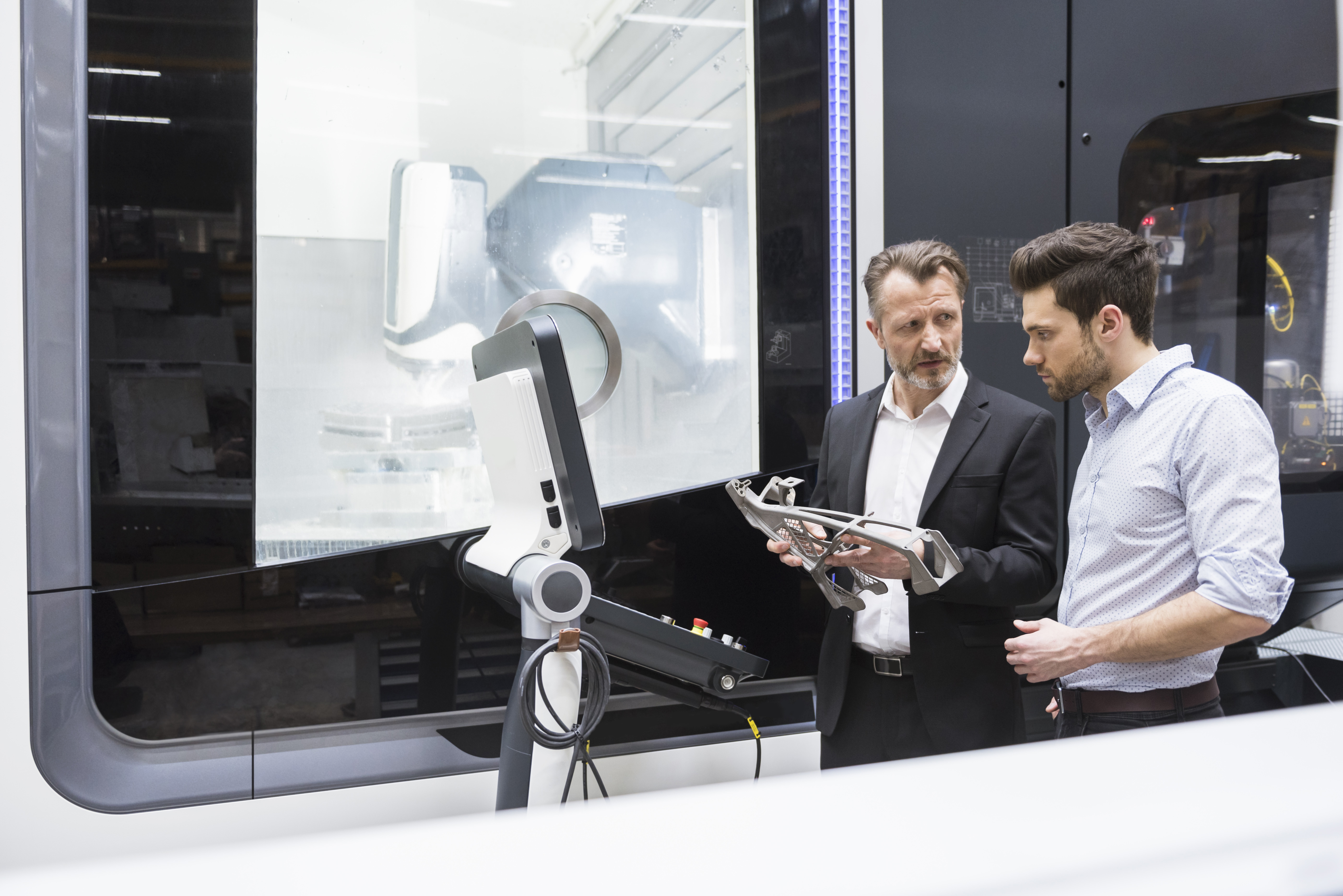



For legacy industrial players, this creates a paradox. The capabilities that once defined their success risk becoming insufficient. At the same time, their deep domain expertise, installed base, and understanding of real-world operations give them a unique advantage in leading this transition.
This shift also changes how performance is judged. Hardware excellence, while still essential, is now the baseline, as customers evaluate solutions not by specifications, but by the outcomes they deliver.
This opens up a clear divide. Companies that move beyond a hardware-only mindset and embrace connected systems can unlock new value pools, from recurring revenue to AI-driven optimisation across the value chain. Those who do not risk being reduced to commodity hardware providers.
The challenge is clear: how can legacy players turn decades of engineering excellence and domain knowledge into a competitive advantage in a systems-driven world? Let’s dive deeper.
For decades, market leadership was defined by superior hardware performance: higher efficiency, better materials, greater durability, enhanced precision, or more power. Excellence meant mastering physical components better than anyone else. Many DACH-based companies born before the digital era built their success on this capability and became global leaders in physical innovation.
That era is not over. But hardware excellence is no longer enough.
Today, superior hardware performance is a prerequisite rather than a differentiator. As physical innovation plateaus, disruption increasingly manifests itself in software capabilities. The companies leading the way are no longer those that build the best individual machines. They are those who engineer systems that integrate seamlessly, create connected systems, and deliver end-to-end outcomes for their customers.
This shift is often seen as a disadvantage for legacy manufacturers. In practice, a company’s history can be a great competitive advantage. This becomes clear when examining current leadership challenges.
Across industrial markets, similar concerns are emerging in leadership discussions:
While these obstacles are real, they often hide an important truth. Legacy industrial companies possess assets that digital natives struggle to replicate, such as deep domain expertise, established value chains, trusted brands, and direct market access.
What stands in the way of success is not legacy, but mindset. As long as organisations remain trapped in a hardware-first perspective, they will continue to optimise individual components while competitors design integrated systems that deliver real value to their customers. By shifting from hardware-first to systems-first thinking, legacy knowledge transforms from perceived baggage into a decisive competitive advantage.
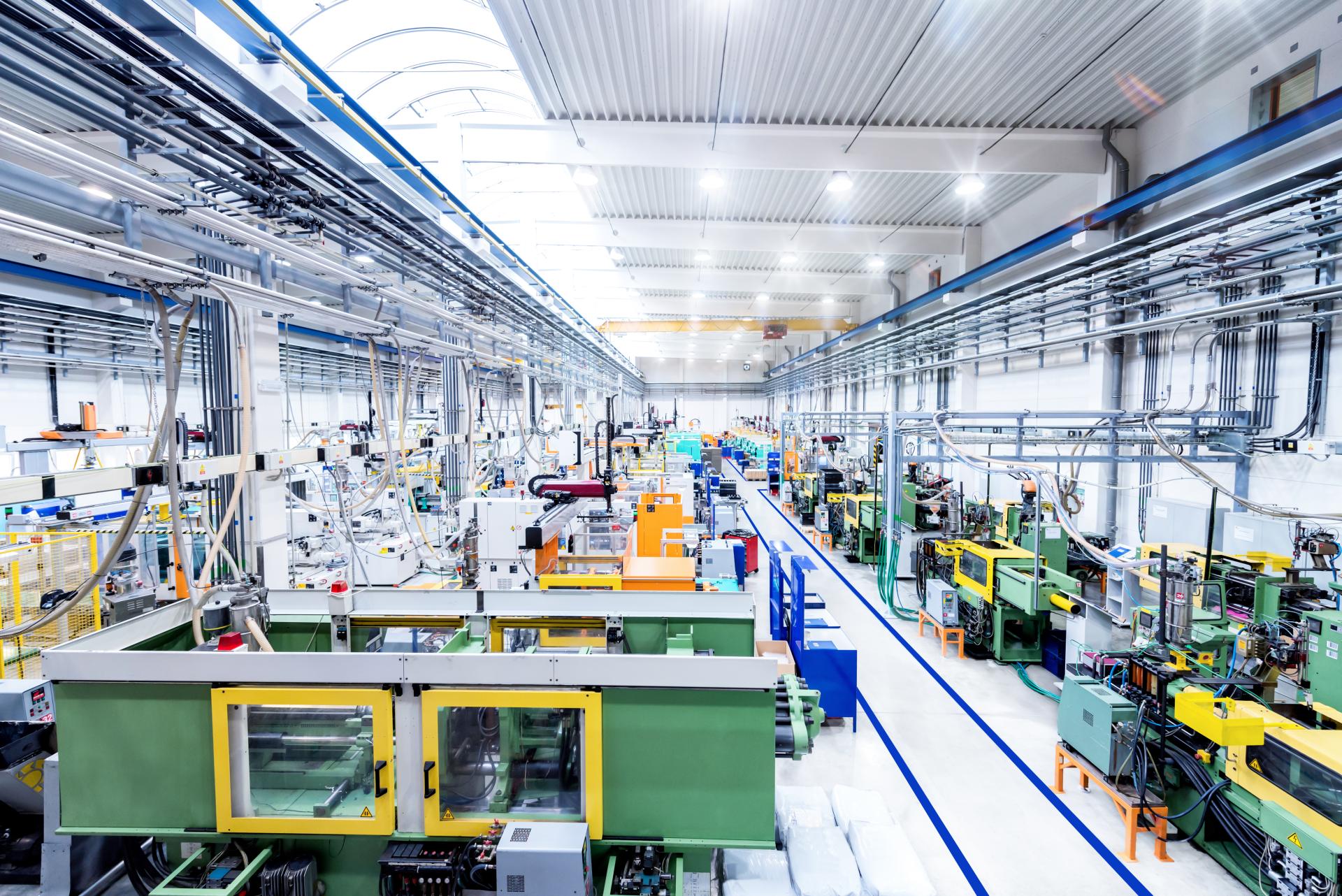
A few years ago, industrial purchasing decisions were driven by specifications. Compressors were compared by pressure ratios, pumps by efficiency curves, and robot arms by payload capacity and speed. These metrics still matter, but they no longer define market leaders.
Today, customers increasingly expect something entirely different: machinery that proactively resolves operational issues and delivers system-level outcomes.
These include guaranteed uptime, predictive maintenance, data-driven optimisation, and intelligent solutions that adjust automatically to changing conditions. The shift mirrors what we experience in everyday life. Just as consumer devices have become more intelligent and self-decisive, the same improvements are expected for industrial equipment.
Take compressed air as an example. Rather than purchasing a compressor, factories now contract guaranteed air availability. System predicts leaks, adjusts output dynamically to demand curves, optimises energy consumption, and ensures uptime through predictive maintenance and service-level agreements. What matters to the customer is no longer the motor’s peak performance, but uninterrupted production. Focusing solely on hardware performance during development is not sufficient to deliver these outcomes.
Digitally native competitors succeed not because they build superior hardware, as it is often their weak point. They succeed because they scale faster by treating hardware and software as a single integrated solution within a larger system.
Hardware excellence remains essential, but it is no longer the hero of the story.
Cyber-physical systems have become a widely used term in recent years, yet their meaning is often misunderstood. But what does it actually mean in the context of industrial and consumer products, and how does it differ from traditional IoT solutions?
A cyber-physical system is a continuous feedback loop between the physical and digital worlds.
Cyber-physical systems are therefore not simply hardware with an added digital layer. Not something customers can add to the hardware. They represent a fundamentally integrated product architecture. They are the product itself.
Importantly, this shift does not require industrial companies to abandon their identity as hardware manufacturers. On the contrary, it makes hardware even more relevant.
The transition from product performance to system outcomes fundamentally changes how industrial products must be designed. But what does this mean in practice?
A “physical device” can no longer be defined solely by its material parts. Hardware, sensors, actuators, embedded intelligence, software, data, connectivity, and user interfaces are no longer separate disciplines delivered sequentially, but form a coherent system that must be engineered as a whole. Designing these systems requires a fundamentally different development approach. In a traditional hardware-centric model, mechanical design usually comes first, software follows, and integration becomes a painful afterthought. In contrast, in a system-centric model, value is designed holistically from day one.
In this model, hardware does not lose relevance. Instead, it becomes the execution layer of an intelligent system. When hardware and software are not designed together from day one, seamless integration becomes almost impossible. At the core of modern cyber-physical systems is software-defined intelligence running on a physical execution layer. This is supported by a system-level stack that includes:
Many industrial leaders worry that cyber-physical systems will diminish the role of hardware. In reality, they make hardware even more valuable. Disruptive innovation theory suggests that incumbents often struggle when markets shift, as the very processes that once made them successful become rigid and difficult to adapt. But this perspective overlooks an important opportunity.
Instead of attempting to replicate the speed of digital disruptors, industrial companies can redefine how they understand their own products. When the definition of the product changes, the processes that support it can evolve accordingly
In cyber-physical systems, the “physical” layer is incredibly hard to replicate. Decades of domain knowledge, customer trust, production experience, and market access are barriers that digital newcomers cannot easily overcome. Digital natives can write software quickly, but they cannot replicate decades of knowledge about how machines behave under real-world conditions.
The key is to rethink how a company defines its product:
When companies adopt the second perspective, legacy knowledge transforms from a perceived constraint into a powerful competitive advantage. Companies that combine deep hardware expertise with system-level software capabilities are therefore uniquely positioned to lead the cyber-physical era.
“The winner isn't the one with the strongest motor. It’s the one with the smartest system.”
For CEOs, CTOs, CPOs, and product leaders, the question is no longer whether this shift will happen, but how quickly and systematically their organisations will respond.
Industrial products will no longer compete as isolated hardware, so the question is whether companies aim to position themselves as system providers or remain component providers within someone else’s system.
Cyber-physical transformation starts with understanding the outcome that customers will receive. From there, the product must be defined as a complex software-enabled hardware system.
The companies that will dominate the next decades will not be the ones that “added software” to hardware, nor those that abandoned the physical world. They will be the companies that master systems, combining deep industrial knowledge with software-defined intelligence to deliver guaranteed outcomes at scale.

Study "Quo vadis product development“
Our transformation study assesses the maturity level, key challenges, and barriers to transformation in industrial product development. Would you like to know how you compare to the rest of the sector? Then take part in our study and receive a personalised analysis with a benchmark comparison.
Access it hereReach out to our expert
Principal Consulting Manager