
• Skip to main content
Zühlke - zur Startseite
  • Business
  • Careers
  • Events
  • About us

Language navigation. The current language is english

  • Expertise
    • AI implementation
    • Cloud
    • Cybersecurity
    • Data solutions
    • DevOps
    • Digital strategy
    • Experience design
    • Hardware engineering
    • Managed services
    • Software engineering
    • Sustainability transformation
    Explore our expertise

    Highlight Case Study

    Zurich Airport transforms operations for a data-driven future

    Learn more
  • Industries
    • Banking
    • Insurance
    • Healthcare providers
    • MedTech
    • Pharma
    • Industrial sector
    • Commerce & retail
    • Energy & utilities
    • Government & public sector
    • Transport
    • Defence
    Explore our industries

    Subscribe to receive the latest news, event invitations & more!

    Sign up here
  • Case studies

    Spotlight case studies

    • Global Research Platforms and Zühlke are fighting Alzheimer's disease
    • Swisscom migrates millions of email accounts to the cloud
    • UNIQA: AI chatbot increases efficiency in 95% with half the effort
    Explore more case studies

    Highlight Case Study

    Zurich Airport transforms operations for a data-driven future

    Learn more
  • Insights

    Spotlight insights

    • AI in the industrial value chain
    • How to master cloud sovereignty with risk-based strategies
    • How to apply low-code technology in the insurance industry
    Explore more insights

    Highlight Insight

    From Hardware to Systems: Turning Legacy into Advantage

    Learn more
  • Academy
  • Contact
    • Austria
    • Bulgaria
    • Germany
    • Hong Kong
    • Portugal
    • Serbia
    • Singapore
    • Switzerland
    • United Kingdom
    • Vietnam

    Subscribe to receive the latest news, event invitations & more!

    Sign up here
Zühlke - zur Startseite
  • Business
  • Careers
  • Events
  • About us
  • Expertise
    • AI implementation
    • Cloud
    • Cybersecurity
    • Data solutions
    • DevOps
    • Digital strategy
    • Experience design
    • Hardware engineering
    • Managed services
    • Software engineering
    • Sustainability transformation
    Explore our expertise

    Highlight Case Study

    Zurich Airport transforms operations for a data-driven future

    Learn more
  • Industries
    • Banking
    • Insurance
    • Healthcare providers
    • MedTech
    • Pharma
    • Industrial sector
    • Commerce & retail
    • Energy & utilities
    • Government & public sector
    • Transport
    • Defence
    Explore our industries

    Subscribe to receive the latest news, event invitations & more!

    Sign up here
  • Case studies

    Spotlight case studies

    • Global Research Platforms and Zühlke are fighting Alzheimer's disease
    • Swisscom migrates millions of email accounts to the cloud
    • UNIQA: AI chatbot increases efficiency in 95% with half the effort
    Explore more case studies

    Highlight Case Study

    Zurich Airport transforms operations for a data-driven future

    Learn more
  • Insights

    Spotlight insights

    • AI in the industrial value chain
    • How to master cloud sovereignty with risk-based strategies
    • How to apply low-code technology in the insurance industry
    Explore more insights

    Highlight Insight

    From Hardware to Systems: Turning Legacy into Advantage

    Learn more
  • Academy
  • Contact
    • Austria
    • Bulgaria
    • Germany
    • Hong Kong
    • Portugal
    • Serbia
    • Singapore
    • Switzerland
    • United Kingdom
    • Vietnam

    Subscribe to receive the latest news, event invitations & more!

    Sign up here

Language navigation. The current language is english

Industrial sector

How development changes when products become cyber-physical systems

Industrial products are evolving into cyber-physical systems. From medical devices to manufacturing equipment, competitive advantage is no longer defined by physical performance alone, but by how hardware, software, connectivity, data, and AI work together.

May 22, 20266 Minutes to Read
With insights from
  • Réka Leisztner

    Principal Consulting Manager
  • Thomas Weber

    Director Systems Consulting

For many organisations, this creates a fundamental challenge. Teams continue to operate in silos, software remains a supporting function rather than a strategic driver, and integration comes too late in the process. The result is rising complexity, slower delivery, and underwhelming user experiences.

In the first article in our series on cyber-physical systems, we explored what this transition means for industrial companies: how the shift from physical products to integrated digital ecosystems is redefining where value is created, how competitive advantage is built, and how products are evolving into something fundamentally new.  

But as products evolve into interconnected systems, the way they are developed must evolve accordingly. In this second article, we examine how cyber-physical systems are reshaping product development and why delivering them requires a different approach to engineering. 

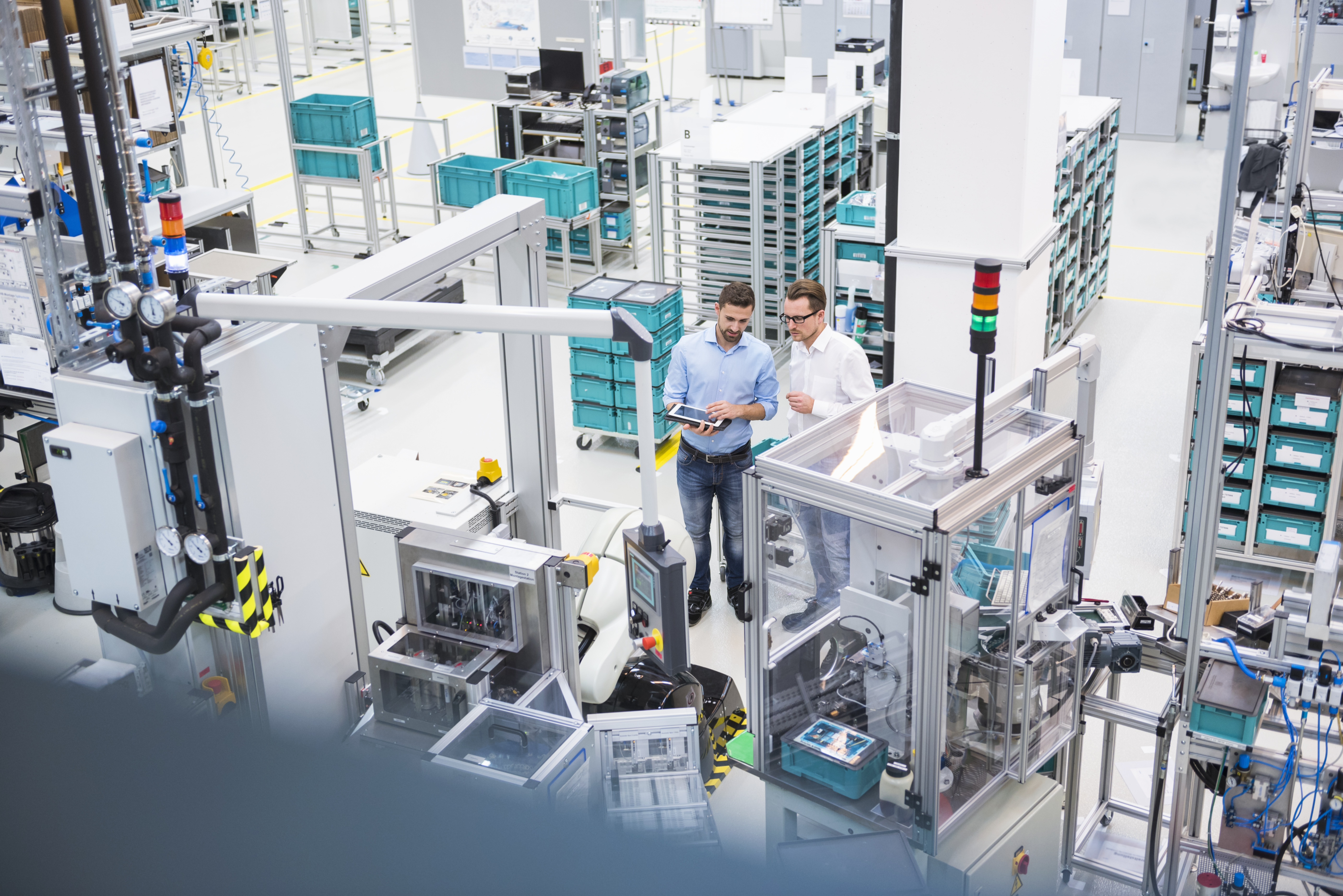
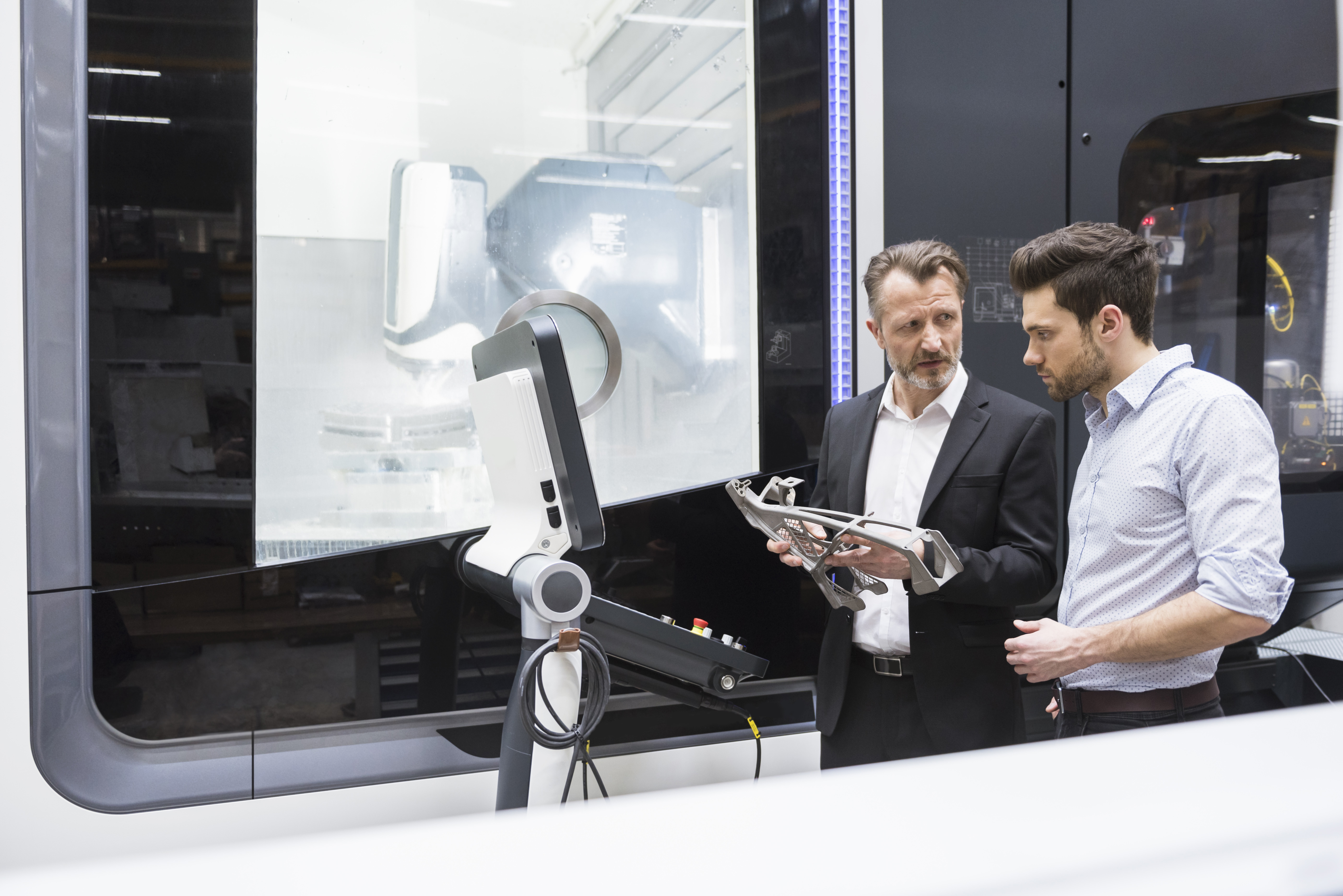
Engineers reviewing industrial system and machine component

Insight

Moving from hardware to systems: how to turn legacy knowledge into the ultimate competitive advantage

The basis of competition in the industrial sectors is changing. Success no longer depends on hardware alone, but on how effectively companies engineer cyber-physical systems.

Read More

When products become systems, development must change

In traditional industrial products, value is created primarily by the performance of their physical components: the precision of a bearing, the torque of a motor, or the durability of a chassis. Engineering excellence comes from how well those components are designed and manufactured.

Cyber-physical systems change that logic entirely. Here, competitive advantage no longer resides in individual components, but in how software, connectivity, data, and user experience interact. 

No single component delivers value by itself. The system itself becomes the product.

Some industrial exemples

Tesla

A Tesla, for example, illustrates this shift clearly. Its value does not come solely from its motor or battery technology, but from the integration of the vehicle platform, battery management system, over-the-air software, autopilot stack, user interface, and continuously evolving software capabilities.

Remove that integration, and much of the product’s differentiation disappears with it. 

Hilti

Hilti’s Nuron cordless tool platform illustrates the same transformation. What differentiates the platform is not only the tools themselves, but the connected ecosystem around them: intelligent batteries, fleet management, usage analytics, predictive maintenance, and integrated software services. 

Customers are no longer buying standalone equipment, but a connected operational ecosystem. 

This changes the basis of competition. Manufacturers can still build outstanding hardware and lose market share to competitors that deliver better system integration, faster software evolution, or superior digital experiences.  

For users, the difference between a cohesive solution and a fragmented product is immediately obvious. Well-designed systems feel seamless, with physical and digital touchpoints that reinforce each other, intuitive workflows, and updates that improve the solution over time. Fragmented products, by contrast, create friction through disconnected and inconsistent digital interfaces.

When value emerges from the system as a whole, isolated component engineering is no longer enough. As a result, industrial companies must rethink not only the products they build, but also how they build them. 

What needs to become standard in development

A fundamental shift in cyber-physical systems is that product development no longer ends at launch.  

Conventional hardware products followed a linear lifecycle. A product was developed, released on a specific date, incrementally improved through service updates, and eventually, teams pivoted and replaced it with the next generation. Because functionality remained relatively stable after launch, development could largely operate through sequential handovers between disciplines and late-stage integration.

Cyber-physical systems change those assumptions. They are never truly complete, as software upgrades extend utility, operational data surfaces new behaviours, and AI models introduce new autonomous functions.

As products continue to evolve after deployment, traditional development models are increasingly difficult to sustain. Sequential handovers between teams grow more fragile as decisions in one area ripple across the entire system. With rising complexity, integration begins to expose interface gaps and hidden dependencies that are difficult to detect early. The later these issues surface, the more costly and disruptive they are to resolve

Development shifts from delivering finished products to managing continuously changing systems. As a result, several development practices become essential: 

Product management becomes iterative rather than specification-driven

Engineering starts with system-level outcomes, not isolated components

User validation shifts earlier and remains integrated throughout development

Cross-functional teams replace less effective department-oriented organisations

Developers optimise for system behaviour rather than individual component performance

Hardware platforms must be designed to support years of future software capabilities

Architecture becomes more important than ever

Traditional product development begins with components and integrates them into a finished product. Cyber-physical systems development starts with the intended outcome and designs the system to deliver it. When value is created through system behaviour, architecture becomes the central discipline, rather than a background engineering concern.  

In practice, architecture becomes one of the primary determinants of whether products can evolve successfully or descend into growing complexity. This requires clear links between user needs, system requirements, and implementation decisions so that functionality, trade-offs, and costs remain aligned throughout the product lifecycle.

To support this evolution, architectures must provide:

  • Clear traceability from business goals to system requirements  
  • Interfaces that allow teams and subsystems to evolve independently
  • Modular functions that combine into customer-facing features  
  • Low coupling between subsystems and strong cohesion within them

These principles allow cross-functional teams to work independently while maintaining overall system coherence. Without them, integration slows, dependencies accumulate, and product changes become harder to deliver reliably. Teams that bypass proper system architecture because they “need to move fast” often face the consequences later through escalating costs, integration challenges, and reduced responsiveness to changing consumer needs.

Architecture is therefore the foundation for sustainable adaptation and integration over time. As systems become increasingly software-defined, technologies such as AI play a growing role in shaping product capabilities, behaviour, and experience. 

How does AI fit into this picture?

AI amplifies many of the changes already transforming cyber-physical systems. Importantly, it creates value through coordinated product behaviour rather than as an isolated feature

For example, an anomaly detection model is only valuable if it can access the right sensor data, integrate with maintenance workflow, and trigger the appropriate physical response. It depends on strong system architecture, seamless integration between components, and a clear understanding of how the overall system solves meaningful customer problems. Organisations that treat AI as an isolated software feature often discover that these foundations are missing.

Designing AI-enabled products starts with intended outcomes rather than standalone features. Because future requirements remain inherently uncertain, organisations must anticipate shifts in users, markets, and operating environments.

This becomes even more important as AI capabilities evolve rapidly. Organisations can no longer assume that software functionality will remain stable across long hardware lifecycles. Products increasingly need architectures capable of absorbing future AI capabilities that do not yet fully exist.

AI is also reshaping how intelligent systems are developed. Used effectively, it can support systems engineering through automated consistency checks, architecture reviews, dependency analysis, and integration risk assessment. When system relationships are clearly defined, AI can propose mitigations and perform plausibility checks across requirements and implementation layers.

But despite rapid technological progress, many companies still approach AI and cyber-physical systems with outdated assumptions on product development. Over time, that disconnect becomes a growing competitive risk. 

The six most common mistakes industrial companies make

As modern industrial products become increasingly software-defined, many organisations still apply development approaches built for a different era. The same failure patterns continue to appear.

Adding digital capabilities without systems thinking 

Many companies add software and connectivity without redesigning the underlying system. The result is often a mechanical product with disconnected digital features layered on top rather than an intelligent end-to-end system.  

Treating software as an add-on 

Locking down hardware design before software requirements are stable remains standard practice in many organisations. In cyber-physical systems, hardware and software shape each other and must evolve together through system architecture.  

Starting with hardware instead of system value 

In many projects, the first document produced is a hardware block diagram. Client needs and customer value are often addressed too late through requirement documents that few people meaningfully use. As a result, architectures often reflect what teams know how to build rather than what consumers actually need. 

Fixing discipline specifications too early

Final product specifications must eventually stabilise. During development, however, agile teams need to focus on the system features to be supported, which may result in incomplete printed circuit boards or mechanical components. 

Approaching system integration as a late-stage milestone 

Gaps in design and interface specifications inevitably emerge during interdisciplinary integration. The more complex the interfaces, the more difficult and time-consuming integration becomes. System integration is then essential for reducing risk and managing complexity early. 

Changing diagrams instead of changing mindsets 

Agile development in complex systems requires system-level thinking, comfort with uncertainty, and a culture that treats failure as learning. The real challenge is enabling this shift within development teams that have operated in silos for decades. 

Key takeaways: what should organisations do now?

For companies and product organisations building complex systems, the question is no longer whether to adapt, but how quickly to do so. Five priorities are critical to making that transition successfully.

1. Identify the real user needs before scaling development 

Successful products solve the right problem, not just a well-engineered one. User needs should be validated early through research and testing before committing to large-scale development. Throughout the product lifecycle, teams must persistently assess whether the system delivers measurable value for clients and the business.  

2. Apply system thinking from the start

Complex products should be designed as part of a wider ecosystem, not isolated solutions. Systems thinking helps teams understand dependencies, trade-offs, interfaces, and lifecycle impacts across the full value chain. This creates products that remain adaptable, resilient, and predictable in real-world use.

3. Build a genuinely agile organisation

Agile is not ensured by sprints and retrospectives alone. Effective organisations focus on continuous learning, rapid feedback, and value delivery through the Plan – Do – Check – Act cycle. This requires an appropriate failure culture, where experimentation is encouraged, creativity is valued, risks are addressed early, and learning is prioritised across leadership and development teams alike.  

4. Integrate and validate continuously 

Early and frequent continuous system integration allows teams to evaluate product behaviour and user value early and often. Rather than waiting for late-stage integration, organisations should regularly combine development outputs into testable system features. This demands both technical discipline and leadership support. 

5. Use and plan for AI wherever sensible 

AI is rapidly reshaping both products and product development. In development, it can serve as an exoskeleton to improve productivity and accelerate decision-making. Organisations should therefore design systems and architectures that can evolve alongside AI and hardware capabilities while using AI tools today to support engineering, delivery, and innovation.  

Industrial companies spent decades optimising development around predictability, stability, and component excellence. Increasingly, those assumptions are no longer sufficient. In cyber-physical systems, complexity does not remain static after launch. Products continue adapting, dependencies continue growing, and integration becomes a permanent engineering challenge rather than a final development phase. 

The real transformation is not only technological, but organisational. Building cyber-physical systems ultimately requires development models designed for iterative adaptation rather than stable, isolated products. 

Explore more Insights

ChatGPT: key considerations for cybersecurity decision makers

Learn more
finger print on digital screen being scanned
Healthcare providers

The reality behind AI's potential in healthcare

Learn more
Banking

How banks can balance security and user experience

Learn more
online banking
Discover all Insights

Get to know us

  • About us
  • Impact & commitments
  • Facts & figures
  • Careers
  • Event Hub
  • Insights Hub
  • News sign-up

Working with us

  • Our expertise
  • Our industries
  • Case studies
  • Partner ecosystem
  • Training Academy
  • Contact us

Legal

  • Privacy policy
  • Cookie policy
  • Legal notice
  • Modern slavery statement
  • Imprint

Request for proposal

We appreciate your interest in working with us. Please send us your request for proposal and we will contact you shortly.

Request for proposal
© 2026 Zühlke Engineering AG

Follow us

  • External Link to Zühlke LinkedIn Page
  • External Link to Zühlke Facebook Page
  • External Link to Zühlke Instagram Page
  • External Link to Zühlke YouTube Page

Language navigation. The current language is english