• Skip to homepage
  • Skip to main content
  • Skip to main navigation
  • Skip to meta navigation
Zühlke - zur Startseite
  • Business
  • Careers
  • Events
  • About us

Language navigation. The current language is english

  • Expertise
    • AI implementation
    • Cloud
    • Cybersecurity
    • Data solutions
    • DevOps
    • Digital strategy
    • Experience design
    • Hardware engineering
    • Managed services
    • Software engineering
    • Sustainability transformation
    Explore our expertise

    Highlight Case Study

    Zurich Airport transforms operations for a data-driven future

    Learn more
  • Industries
    • Banking
    • Insurance
    • Healthcare providers
    • MedTech
    • Pharma
    • Industrial sector
    • Commerce & retail
    • Energy & utilities
    • Government & public sector
    • Transport
    Explore our industries

    Subscribe to receive the latest news, event invitations & more!

    Sign up here
  • Case studies

    Spotlight case studies

    • Global Research Platforms and Zühlke are fighting Alzheimer's disease
    • Brückner Maschinenbau leverages GenAI to optimise efficiency by improving master data management
    • UNIQA: AI chatbot increases efficiency – 95% accuracy with half the effort
    Explore more case studies

    Highlight Case Study

    Zurich Airport transforms operations for a data-driven future

    Learn more
  • Insights

    Spotlight insights

    • AI in the industrial value chain
    • How to master cloud sovereignty with risk-based strategies
    • Tech Tomorrow Podcast
    Explore more insights

    Highlight Insight

    AI adoption: Rethinking time and purpose in the workplace

    Learn more
  • Academy
  • Contact
    • Austria
    • Bulgaria
    • Germany
    • Hong Kong
    • Portugal
    • Serbia
    • Singapore
    • Switzerland
    • United Kingdom
    • Vietnam

    Subscribe to receive the latest news, event invitations & more!

    Sign up here
Zühlke - zur Startseite
  • Business
  • Careers
  • Events
  • About us
  • Expertise
    • AI implementation
    • Cloud
    • Cybersecurity
    • Data solutions
    • DevOps
    • Digital strategy
    • Experience design
    • Hardware engineering
    • Managed services
    • Software engineering
    • Sustainability transformation
    Explore our expertise

    Highlight Case Study

    Zurich Airport transforms operations for a data-driven future

    Learn more
  • Industries
    • Banking
    • Insurance
    • Healthcare providers
    • MedTech
    • Pharma
    • Industrial sector
    • Commerce & retail
    • Energy & utilities
    • Government & public sector
    • Transport
    Explore our industries

    Subscribe to receive the latest news, event invitations & more!

    Sign up here
  • Case studies

    Spotlight case studies

    • Global Research Platforms and Zühlke are fighting Alzheimer's disease
    • Brückner Maschinenbau leverages GenAI to optimise efficiency by improving master data management
    • UNIQA: AI chatbot increases efficiency – 95% accuracy with half the effort
    Explore more case studies

    Highlight Case Study

    Zurich Airport transforms operations for a data-driven future

    Learn more
  • Insights

    Spotlight insights

    • AI in the industrial value chain
    • How to master cloud sovereignty with risk-based strategies
    • Tech Tomorrow Podcast
    Explore more insights

    Highlight Insight

    AI adoption: Rethinking time and purpose in the workplace

    Learn more
  • Academy
  • Contact
    • Austria
    • Bulgaria
    • Germany
    • Hong Kong
    • Portugal
    • Serbia
    • Singapore
    • Switzerland
    • United Kingdom
    • Vietnam

    Subscribe to receive the latest news, event invitations & more!

    Sign up here

Language navigation. The current language is english

All industries

Can executives balance AI innovation with societal responsibility?

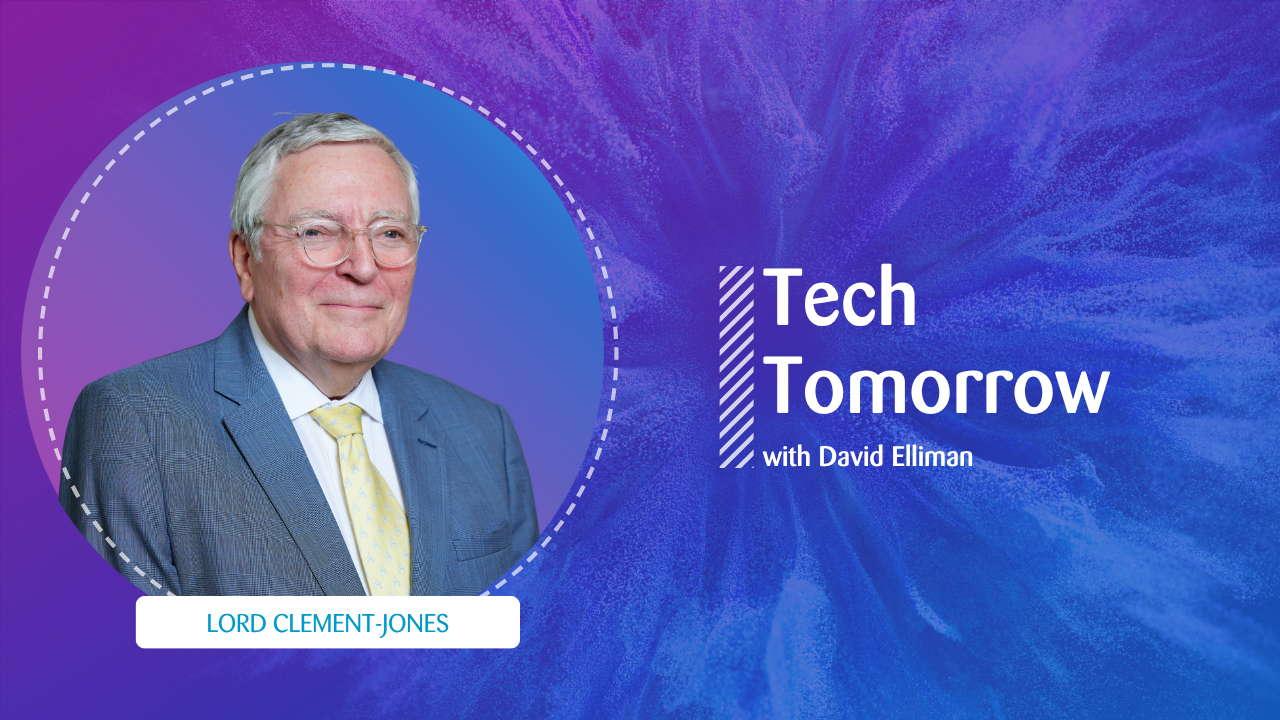
In this episode of the Tech Tomorrow podcast, David Elliman sits down with Lord Clement-Jones to explore what responsible AI looks like in practice, and why good governance is fast becoming the real competitive advantage.

November 24, 20254 Minutes to Read
With insights from

David Elliman

Global Chief of Software Engineering

AI has entered the boardroom. But as businesses race to harness its power, one question looms large: can innovation and responsibility truly coexist?

In this episode of the Tech Tomorrow podcast, David Elliman speaks with Lord Clement-Jones, Liberal Democrat peer, former Chair of the House of Lords AI Select Committee, and co-chair of the All-Party Parliamentary Group on AI. Together, they explore how business leaders can align technological progress with human values and why doing so is not just ethical but essential for sustainable innovation.

Meet the guest: Lord Clement-Jones

A seasoned policymaker and lawyer, Lord Clement-Jones has spent the past decade shaping the UK’s approach to technology and ethics. He co-founded the All-Party Parliamentary Group on AI and has advised international bodies from the OECD to the Council of Europe on digital governance.

He describes himself as a “techno-optimist”, but one who insists optimism must be grounded in accountability.

“Innovation doesn’t have merit all by itself. Progress implies human benefit. We need to make sure technology remains our servant, not our master”, he says.

Key takeaways from the episode

Regulation isn’t the enemy of innovation — it’s the enabler

In business circles, regulation is often seen as a brake on progress. But Lord Clement-Jones believes the opposite is true: “I’ve never seen regulation as the enemy of innovation, quite the reverse. Done well, it creates consistency and certainty. It gives businesses the confidence to adopt AI and customers the trust to embrace it”, he says.

This pragmatic stance frames regulation as infrastructure for trust and as essential for sustainable innovation.

In his book Living with the Algorithm: Servant or Master?, he warns that governments risk stifling growth not by overregulating, but by failing to define clear, ethical standards. “Certainty about standards stimulates innovation,” he argues. “Uncertainty destroys it.”

The business case for responsible AI

Boards that see AI purely as a cost-cutting or optimisation tool are missing the bigger picture. Responsibility isn’t just an ethical obligation; it is now a strategic necessity. 

“If employees think AI is being used to surveil them, or customers feel they’re just the object of an algorithm, you lose trust. And once you lose trust, you lose your licence to operate.” “If employees think AI is being used to surveil them, or customers feel they’re just the object of an algorithm, you lose trust. And once you lose trust, you lose your licence to operate.”

Lord Clement-Jones

Liberal Democrat peer and co-chair of the All-Party Parliamentary Group on AI

Trust is the real currency of the AI era. Organisations that deploy AI transparently — explaining how it works, where its data comes from, and how it’s governed — will be the ones that retain both talent and customers.

As David Elliman notes, “The best AI architecture means nothing if people reject it.”

From ethics to action: what boards need to do

The discussion moves beyond principles to the mechanics of AI governance. Both agree that successful adoption starts with clear, board-level ownership.

  • 1. Build digital literacy at the top

    Every board needs a baseline understanding of AI; not just its potential, but its risks, biases, and limits. At least one director should have genuine technical credentials, supported by independent experts when needed.

  • 2. Bake ethics into design

    “Retrofitting ethics into an AI system is impossible,” warns Lord Clement-Jones. Boards must demand transparency from the start, including during procurement, when algorithms are trained, and when decisions are automated. Black-box systems that can’t be explained should be a red flag.

  • 3. Treat governance as strategy

    AI governance isn’t an add-on to ESG reporting; it’s core to corporate strategy. Oversight mechanisms (whether audit committees or dedicated AI councils) must track fairness, accountability, and explainability as rigorously as financial metrics.

  • 4. Make responsible AI measurable

    Impact assessments, reporting milestones, and KPIs should cover more than implementation. They should assess outcomes: Is the AI equitable? Transparent? Trusted by users?

Ethics by design: the roadmap to responsible AI

Ethics, Lord Clement-Jones argues, doesn’t need to be abstract. It’s a practical framework grounded in established principles — transparency, accountability, fairness, and non-discrimination — much like the ESG movement before it.

“If people are allergic to the word ‘ethics’, call them operational principles,” he says. “They’re the same thing, and they’re good for your reputation.”

David Elliman echoes this operational mindset:

“Purpose, proportionality, and accountability — that’s the triad of responsible AI. It’s not about slowing down innovation, it’s about ensuring it scales safely.” “Purpose, proportionality, and accountability — that’s the triad of responsible AI. It’s not about slowing down innovation, it’s about ensuring it scales safely.”

David Elliman

Global Chief of Software Engineering

The skills gap at board level

One of Lord Clement-Jones’s biggest concerns is how few boards truly understand AI’s implications.

“How many boards really have people who understand what’s going on?” he asks. “SMEs in particular risk plunging into something they don’t understand, without knowing the unintended consequences.”

He calls for AI literacy training for directors, so they can interrogate technical claims and align AI adoption with corporate purpose. For him, purpose is the key word:

“Every business needs to define what it’s for, what it’s trying to do. AI is a chance to re-examine that and to use technology to make work better, not to replace it.”

Innovation and responsibility aren’t opposites

For both guests, the idea of “balancing” innovation with responsibility is a false choice.

“Irresponsible innovation isn’t innovation at all,” David Elliman concludes. “It’s just technical debt waiting to come due.”

When done right, responsibility accelerates innovation. Ethical design avoids costly rework, reputational damage, and regulatory penalties. Companies that earn trust through responsible AI gain the permission to innovate faster.

Looking ahead: optimism with guardrails

Despite political uncertainty and global disparities in regulation, Lord Clement-Jones remains hopeful. 

“I’m a techno-optimist — conditionally. We must bring regulation and transparency forward now, before AI outpaces our control. If we can harness it for benefit, not detriment, we’ll create genuine progress: innovation with purpose.” “I’m a techno-optimist — conditionally. We must bring regulation and transparency forward now, before AI outpaces our control. If we can harness it for benefit, not detriment, we’ll create genuine progress: innovation with purpose.”

Lord Clement-Jones

Liberal Democrat peer and co-chair of the All-Party Parliamentary Group on AI

Explore more Insights

All industries

AI’s business impact: 5 key insights from Zühlke & ETH Zürich

Learn more
Banking

Machines are the customers of tomorrow – is your business ready?

Learn more
Artificial intelligence technology concept with AI text on electronic circuit board
All industries

Digital interaction: the role of LLMs in personalising experiences

Learn more
Discover all Insights

Get to know us

  • About us
  • Impact & commitments
  • Facts & figures
  • Careers
  • Event Hub
  • Insights Hub
  • News sign-up

Working with us

  • Our expertise
  • Our industries
  • Case studies
  • Partner ecosystem
  • Training Academy
  • Contact us

Legal

  • Privacy policy
  • Cookie policy
  • Legal notice
  • Modern slavery statement
  • Imprint

Request for proposal

We appreciate your interest in working with us. Please send us your request for proposal and we will contact you shortly.

Request for proposal
© 2025 Zühlke Engineering AG

Follow us

  • External Link to Zühlke LinkedIn Page
  • External Link to Zühlke Facebook Page
  • External Link to Zühlke Instagram Page
  • External Link to Zühlke YouTube Page

Language navigation. The current language is english