






• Skip to main content

In-store analytics: make customer journeys measurable with AI

Online, every click is measured. On the shop floor, visibility ends at the door. AI for retailers changes that: it measures the journey and guides customers in the aisle, without compromising trust.

Download the free whitepaper

The cost of limited in-store visibility

of value generative AI could unlock in retail, worth 1.2 to 1.9 margin points

McKinsey & Company
AI in Retail Campaign, 240 to 390 billion dollars

of gross sales lost to in-store inefficiencies, up from 4.5%

Coresight Research
AI in Retail Campaign, 6,4 percent

of store staff have watched a customer leave without help 

Logile
AI in Retail Campaign, 73 percent
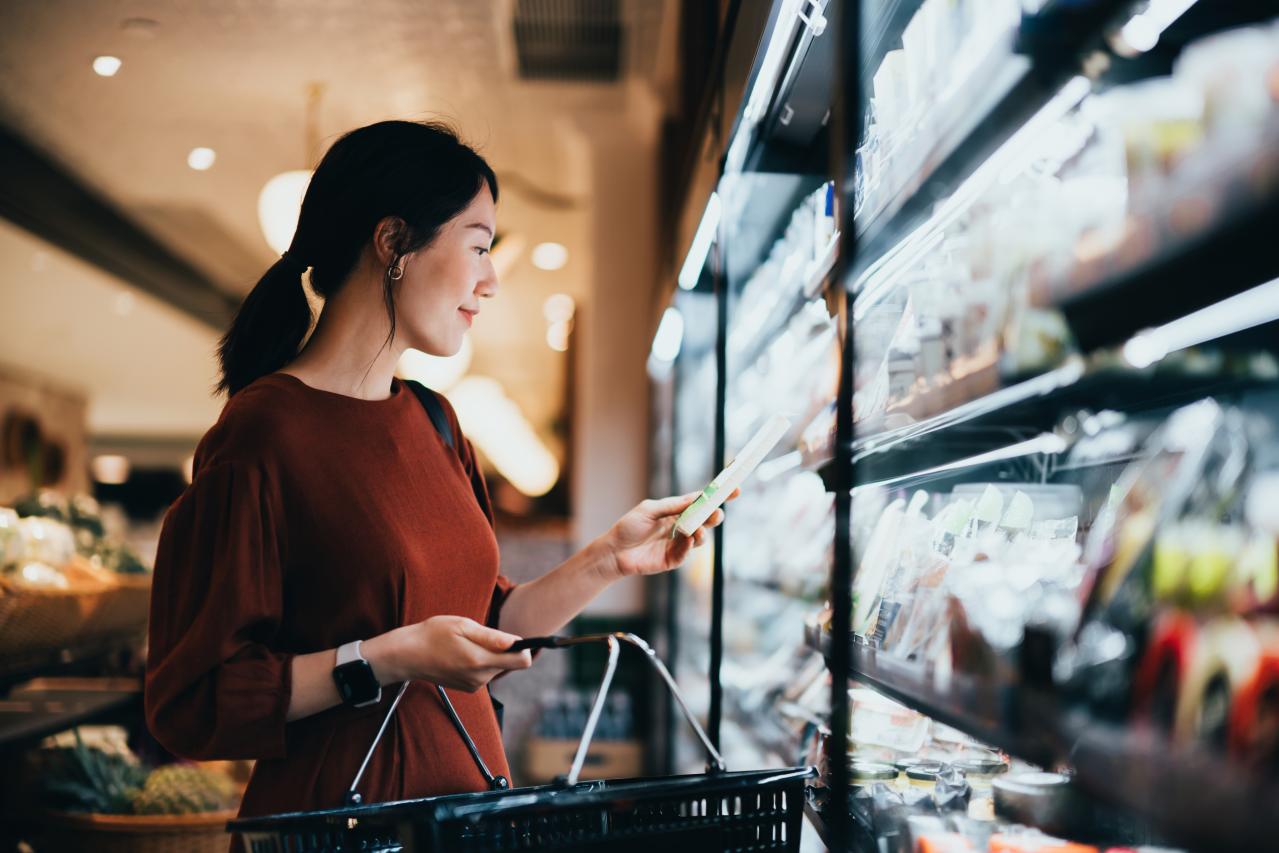
Young Asian woman carrying a shopping basket while grocery shopping in supermarket, standing along the dairy aisle, reading the nutrition label on a packet of fresh organic cheese. Making healthier food choices

Beyond footfall analytics: the shop floor is retail’s biggest blind spot

Online retailers trace every step from click to purchase. Point-of-sale systems know what customers bought, and footfall counters know how many came in. But neither answers the questions that decide a sale:

  • How long do customers wait?
  • Where does attention go on the shelf?
  • Which questions go unanswered?
  • Why do visitors leave without buying?
Customer photographing dress with smart phone in boutique

AI-powered in-store analytics answers all four in two layers. Analytical AI works in the background, using computer vision to reveal movement, dwell and waiting times, while consent-based, anonymised conversation analysis shows what customers need and where service breaks down. Interactive AI works in the foreground, guiding customers to the right product or person.

The principle is simple: analyse patterns, not individuals. Focus on topics, advice quality and process times, not employee performance. 

Get the in-store analytics whitepaper

Explore practical ways to put AI to work in your stores

Download the whitepaper

From data to decision: what changes and what it produces

Customer experience

Shorter waits, proactive engagement from staff and interactive AI, and clearer orientation

  • Higher satisfaction, longer dwell time and greater conversion. 

Sales

Cross-selling opportunities identified and themes surfaced, with routine questions handled by interactive AI

  • Higher basket value and conversion rate.

Staff upskilling

Aggregated conversation patterns as the basis for targeted coaching 

  • Better advice and higher employee satisfaction. 

Operations

Workforce scheduling built on actual footfall insights from analytical AI, rather than intuition alone

  • Less under- and overstaffing and lower inefficiency costs.
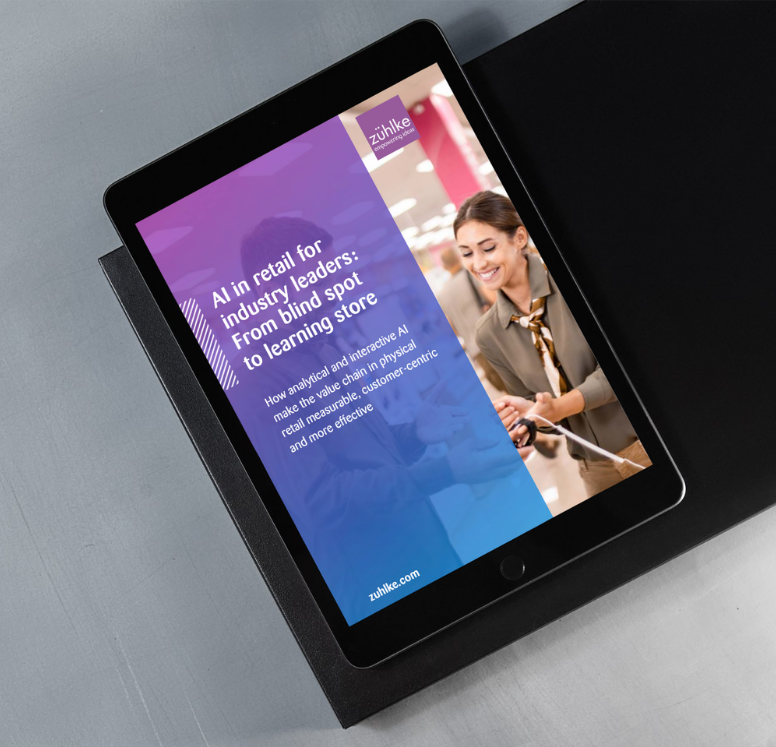
AI in Retail for industry leaders: from blind spot to learning store whitepaper mockup

A store that listens, learns and responds

AI-driven customer journey analytics is already making previously invisible in-store interactions measurable. Zühlke has deployed computer vision and consent-based conversation analysis across three stores for a leading Swiss telecoms retailer.

This whitepaper shows how to turn that visibility into value, meet regulatory requirements and customer expectations, and build the evidence to scale. You’ll learn:

  • Why conversations reveal what footfall and heatmaps miss
  • How to turn movement, dwell and waiting times into better decisions
  • How analytical and interactive AI work together
  • How to build in privacy by design, consent and regulatory compliance from the start
  • When to process data at the edge or in the cloud
  • How to move from one focused pilot to an evidence-based scaling decision in 90 days
Download the free whitepaper

What you get: evidence, legal framing and a way to start 

Fill in the form to receive the whitepaper "AI in retail for industry leaders: From blind spot to learning store", including the edge-versus-cloud comparison, the EU AI Act classification table, and a phase-by-phase roadmap for your first store. 

Case studies from retailers embracing transformation

Discover how we’re helping retailers use data and AI to understand customers better, improve operations, and create more engaging retail experiences.

Xovis: a scalable platform for visitor flow analytics

Xovis uses 3D sensors to analyse visitor flows. Zühlke helped build a privacy-conscious cloud platform that turns real-time sensor data into a standardised service for new markets.

Read the case study
xovis case study logo

LANDI: a comprehensive AI strategy for retail transformation

LANDI needed a clear AI direction for its customer-facing processes. Zühlke ran a maturity analysis plus cross-unit workshops, producing eight use cases, a roadmap, and a target operating model.

Read the case study
landi case study logo

Coop: using customer insights to improve engagement

Coop wanted to understand how its Supercard app could better engage customers. Zühlke used outside-in research, interviews and Jobs-to-be-Done analysis to identify the value drivers for new services.

Read the case study
coop case study logo

MS Direct: a cross-border returns platform for retail logistics

MS Direct looked to digitise its cross-border returns process. A dedicated Zühlke team built a scalable platform in just three months, helping the company win new customers and grow revenue.

Read the case study
msdirect case study logo
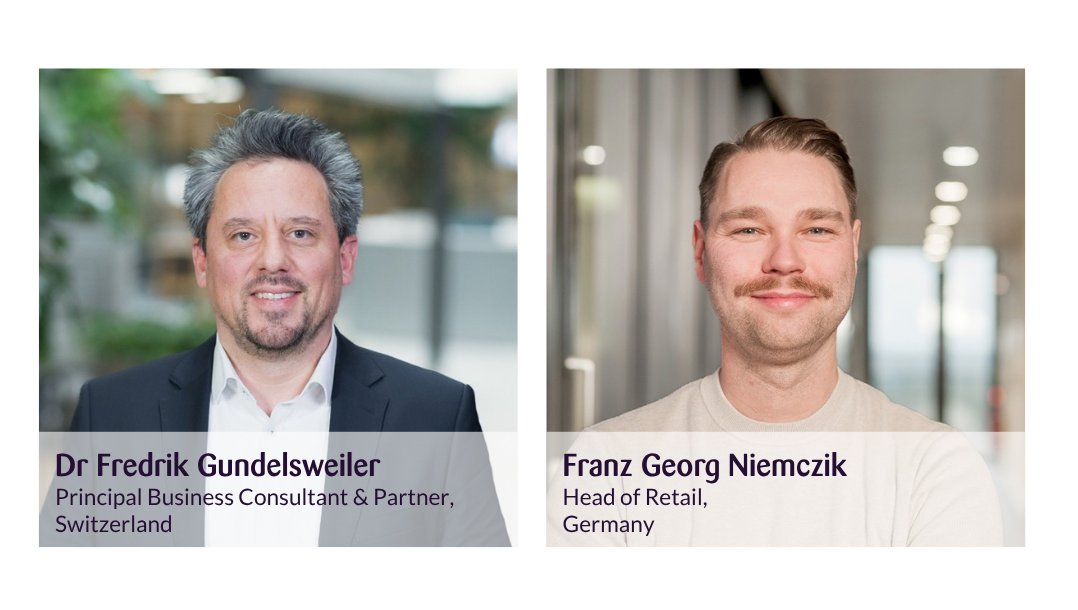
AI in Retail Team, Dr Fredrik Gundelsweiler, Principal Business Consultant & Partner, Switzerland and Franz Georg Niemczik, Head of Retail, Germany

Your free, no-obligation deep dive

Together, we’ll identify your strongest levers. Where is your shop floor losing revenue today? Which use case can create measurable impact fastest? And what could a realistic architecture and pilot look like?

You'll speak to the authors of the whitepaper: 

  • Dr Fredrik Gundelsweiler, Principal Business Consultant & Partner, Switzerland
  • Franz Georg Niemczik, Head of Retail Innovation, Germany
Download the free whitepaper

Frequently asked questions about in-store analytics

What is in-store analytics?

In-store analytics measures what happens on the shop floor: how customers move, how long they dwell and wait, and what they ask for. AI adds what point-of-sale data and footfall counters miss, so retailers can track the store KPIs that decide a sale.

How is AI-powered in-store analytics different from footfall analytics?

Footfall analytics tells you how many people came in. AI also shows how long they waited, where their attention went and which questions went unanswered, using computer vision and consent-based, anonymised speech analytics. 

How do you protect customer privacy in in-store analytics?

By applying privacy by design: analyse patterns, not individuals; use consent-based, anonymised conversation analysis; and focus on topics, advice quality and process times rather than employee performance. The whitepaper shows how to build this in from day one. 

Does the EU AI Act apply to AI in retail stores?

It depends on what the system does. The EU AI Act distinguishes prohibited, high-risk and lower-risk uses. The whitepaper includes a classification table to help you place your use case.

Should in-store AI run at the edge or in the cloud?

Edge AI processes data in the store itself, which keeps sensitive data on-site and shortens response times. The cloud scales more easily and centralises analysis. The whitepaper compares both so you can choose for your first store.

How long does it take to go from pilot to a scaling decision?

The whitepaper lays out a 90-day path: one focused pilot, measured against clear KPIs, ending in an evidence-based decision on whether and how to scale.

© 2026 Zühlke Engineering AG

Follow us

  • External Link to Zühlke LinkedIn Page
  • External Link to Zühlke Facebook Page
  • External Link to Zühlke Instagram Page
  • External Link to Zühlke YouTube Page

Language navigation. The current language is english